
The care contract
Type, content and scope of the services, each with the agreed fee. With new clients coming in all the time, new contracts are created constantly.
You agree the fees with the payers (Kostenträger, such as the long-term care insurance funds), not with the client. If they change, every file contains an amount that no longer applies. In a template, you change it in one place.
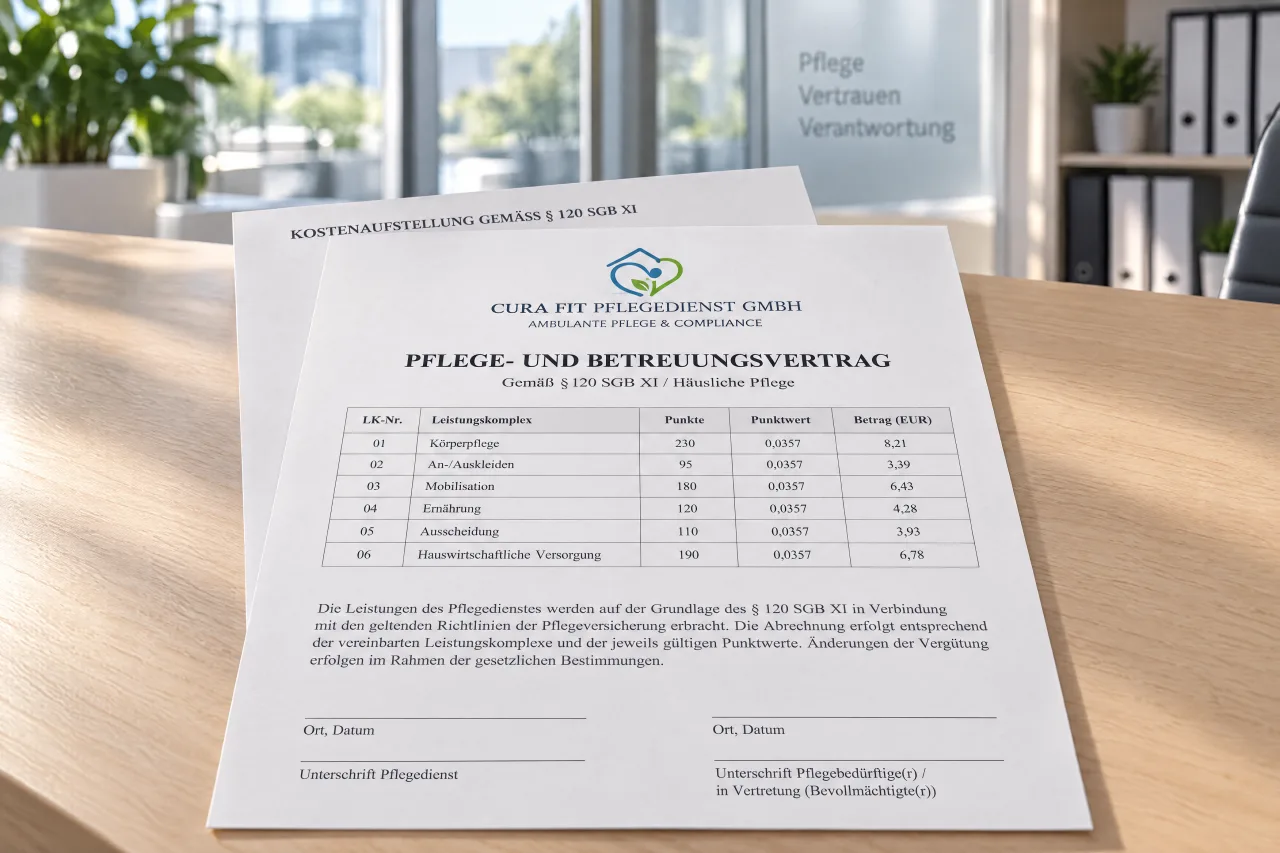
The services are listed individually in the contract, each with its rate. Every client has different services and different amounts; the text around them stays the same.
Type, content and scope of the services, each with the agreed fee. With new clients coming in all the time, new contracts are created constantly.
Whether the care level (Pflegegrad) changes or the scope of services is adjusted: every change requires an updated written cost statement under § 120 of the German Social Code, Book XI (SGB XI), which you generate directly from the existing case data.
Many clients receive services from several providers. The contract therefore has to describe exactly what comes from you.
The signature
The contracting party is the person in need of care. They can sign themselves, but often an authorised representative or a court-appointed legal guardian does. In that case the note “on behalf of” (in Vertretung) belongs in the signature field. Without it, the person signing risks being held personally liable for the care costs incurred. In a template, representation is therefore set up as a separate signature block that can be switched on and only appears when it is actually needed. The name below it may still be open when the contract is created, since who signs at the appointment is rarely known in advance.
Sign up and we will notify you as soon as the free trial starts.