
Employment contracts
Permanent, fixed-term, part-time, working students, internships. In most businesses, five templates cover almost everything.
New hires, salary changes, working students, parental leave: each time a document is created. It is written by management or in the office, usually from the contract of the last hire.
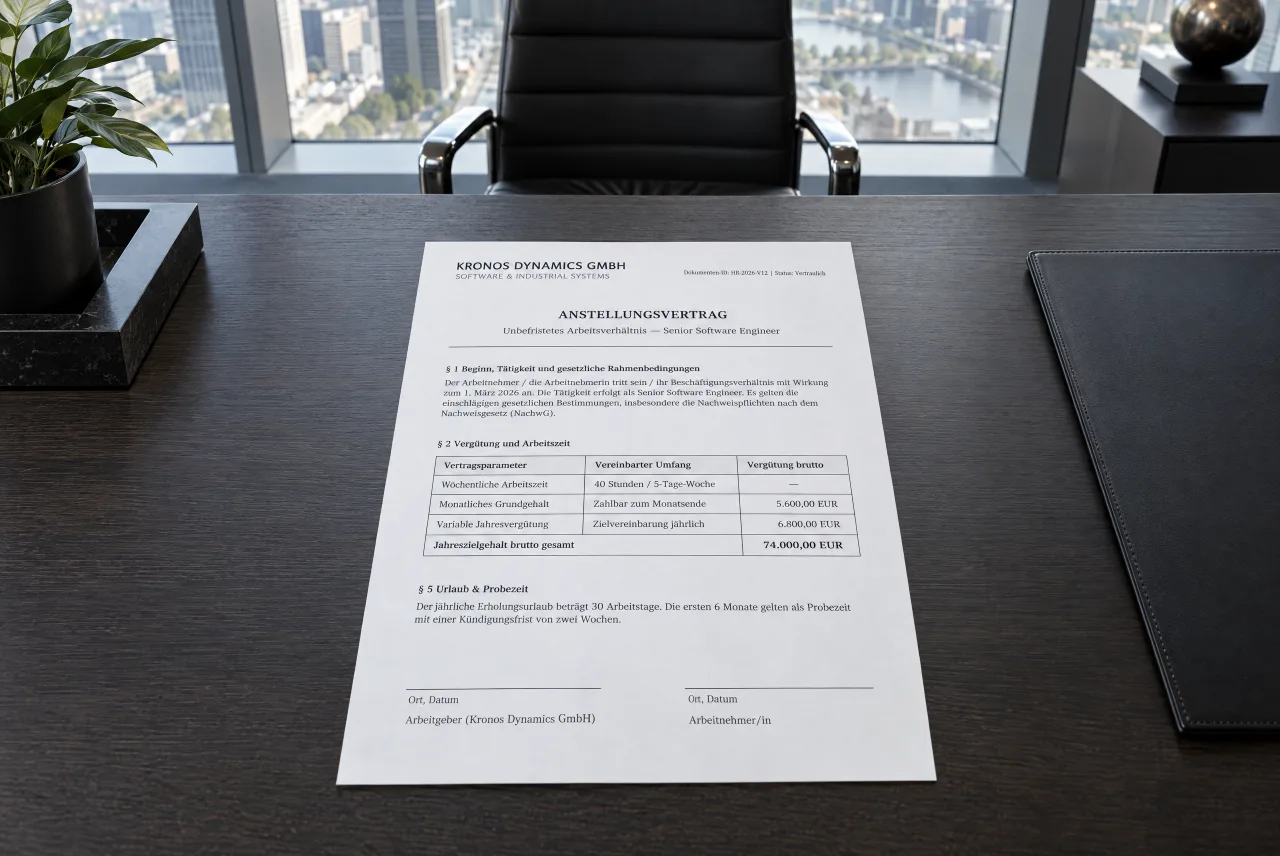
The process
Employment contracts aren’t kept in any system; they sit in a folder on a network drive. The new one is created from the last one: swap the name, adjust the salary, change the date. The predecessor’s name appears in three places, and when checking, you miss one.
If you only think of new contracts, you seriously underestimate the volume.
Permanent, fixed-term, part-time, working students, internships. In most businesses, five templates cover almost everything.
Whether a pay rise, a change in working hours or new responsibilities: significant changes to the terms of employment must be documented in a legally sound way in text form. Create formally valid addenda in a few minutes.
Termination agreements, confirmations of notice and settlement agreements: especially when parting ways, form requirements and deadlines must be met without error to avoid legal risks.
Discreet data protection
On unsecured network drives, sensitive personnel data is often visible to the whole office. With DocuNorm’s granular permissions you decide exactly who gets access to employment contracts and salary structures. Management and those responsible for HR work protected, while the rest of the team only sees operational documents.
Sent or signed
For documenting the essential terms of employment under the Nachweisgesetz, the German act on written evidence of employment terms, text form has been sufficient in most sectors since 2025: a PDF that you send by email. Where the law requires written form, for example for fixed-term contracts, you get a print-ready document for signing.
Sign up and we will notify you as soon as the free trial starts.